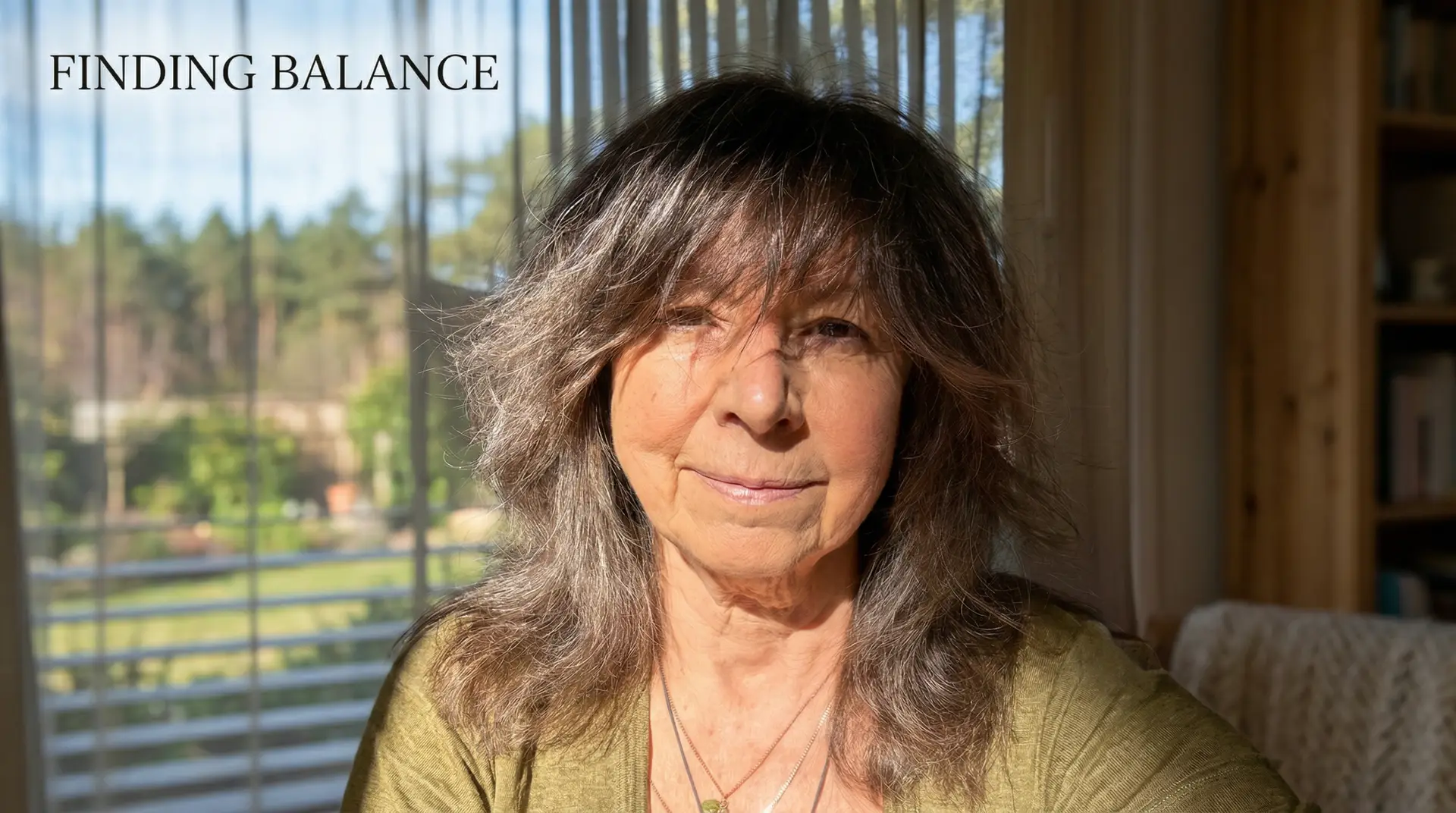
Christel Kinning: The leadership qualities we can’t afford to keep ignoring
Christel Kinning: What 40+ years in business taught me about what we need next. These are the leadership qualities we can’t afford to keep ignoring.

Christel Kinning: What 40+ years in business taught me about what we need next. These are the leadership qualities we can’t afford to keep ignoring.

Recently, Future Navigators was named the Best Boutique Business Strategy Consultant 2025 in Sweden by EU Business News, as part of their European Business Awards.

Rapid advances in AI are fundamentally changing how decisions are made, how work gets done, and how trust is built. At the same time, the economic landscape has remained uneven, with easing but persistent inflation pressures and cautious capital allocation.

There is an aspect of strategy that we rarely acknowledge, perhaps because it feels too subtle, too human, or too inward to fit comfortably within the rational language of business. Yet it is this very dimension that determines the difference between strategies that remain conceptual and those that become living, breathing realities.

Every meaningful strategic journey begins long before we start shaping purpose statements or describing who we want to become. It begins by widening our field of vision — from past, to present, and to the evolving future — to understand the deeper story and context that the organisation is part of.

In a world that rewards speed, slowing down can feel counterintuitive — even risky. Yet for you as a leader, it may be the most important strategic move you can make.
Recently, Future Navigators was named the Best Boutique Business Strategy Consultant 2025 in Sweden by EU Business News, as part of their European Business Awards.
Rapid advances in AI are fundamentally changing how decisions are made, how work gets done, and how trust is built. At the same time, the economic landscape has remained uneven, with easing but persistent inflation pressures and cautious capital allocation.
There is an aspect of strategy that we rarely acknowledge, perhaps because it feels too subtle, too human, or too inward to fit comfortably within the rational language of business. Yet it is this very dimension that determines the difference between strategies that remain conceptual and those that become living, breathing realities.
Every meaningful strategic journey begins long before we start shaping purpose statements or describing who we want to become. It begins by widening our field of vision — from past, to present, and to the evolving future — to understand the deeper story and context that the organisation is part of.

The challenges facing businesses today are not only strategic and operational — they are existential. Climate change, societal fragmentation, technological disruption, and shifting stakeholder expectations all call for a deeper kind of leadership and a new way of designing business.

The world is changing fast. Technological advancements, shifting consumer expectations, and evolving regulations are transforming the business landscape. One of the most critical concepts in making sense of these shifts is the strategic inflection point—a moment where fundamental change becomes inevitable and demands a new approach.

In 1970, economist Milton Friedman wrote a New York Times article titled “The Social Responsibility of Business Is to Increase Its Profits.” In the article,

Sustainability strategy and reporting are still often seen as functional responsibilities, rather than something that is well-integrated in the overall business strategy and business model.

The world around us is often described as increasingly volatile, complex, and ambiguous.

It’s the beginning of 2007 – 13 years ago, just before the global financial crisis hit – and I just got back from the doctor.