

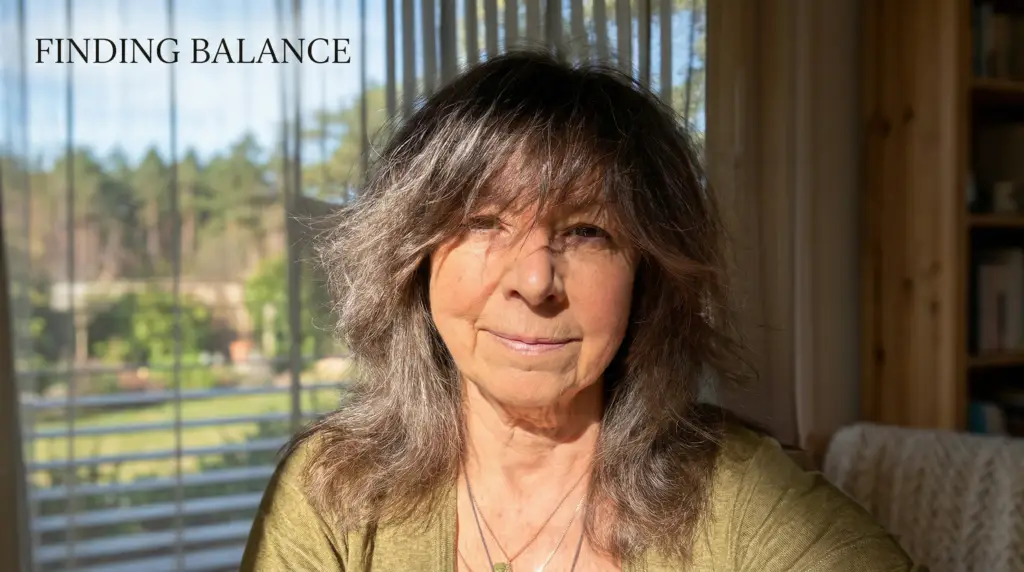


What 40+ years in business taught me about what we need next.
There were times when I sat with a 300-page strategy document packed with KPIs that seemed to “prove” we were on the right track. And yet, something in me kept sensing that the much smaller challenger brand was touching something real, something the numbers couldn’t quite capture.
Five years later, they merged on the same valuation. Today, it won’t take five years. Things will move much faster.
I’ve carried a lot of insecurities during my 40+ years in business, insecurities you would never guess from my achievements.
Not being enough. Not living up to expectations. Being wrong. Not good or smart enough.
And yet: I have never once doubted that I, as a woman, can be as successful as a man.
What I did doubt for a period was something else: the value of what I call feminine leadership qualities and I don’t mean gender. I mean capacities like sensing what’s emerging, holding space for co-creation, and listening with empathy.
Here’s the paradox I want to explore.
The very qualities that made me successful—my ability to read the room, feel timing, sense shifts in customers and culture, see potential in people and ideas, and stay present in uncertainty—were often treated as “soft” or “irrelevant” once I entered certain financial environments. Especially in contexts shaped by PE logic and the gravitational pull of a listed-company reality.
I was invited into those rooms because I could build and lead. And then, in those same rooms, the capacities that helped me build were often dismissed.
When leadership becomes a performance of certainty
In some environments, working capital and a strategy document filled with KPIs and predictions carried more weight than the human experience—or what was shifting beyond the competition.
The logical mind loves certainty. It loves measurable progress. It loves control.
And to be clear: discipline matters. Structure matters. Numbers matter. I became extremely good at them.
But something else happened too.
When my voice, my sensing, my pattern recognition, and my questions were repeatedly ignored, I started to assume I was wrong. That it was me who didn’t understand what was important. So I adapted. I learned to speak the language of certainty. I got even better at number-crunching.
And slowly, I muted what I knew, what I sensed.
Until one day I realised I had lost the joy and passion of building, together with brilliant people.
It took time to reopen that connection.
And I know many people feel this today—across generations, across roles—that something is fundamentally off in the way we work together. Looking back, it’s easy for me to see all the evidence. But what I really want to say to you who are in the middle of your career is this:
Trust what you are sensing. You’re not alone and you’re not wrong for noticing. And dare to bring it up, not as a complaint, but as an invitation to explore what else might be possible. It’s time for business 3.0, a business that supports life.
What I mean by “feminine qualities” and why they’re misunderstood
When I say “feminine qualities,” I don’t mean women. I mean a set of human capacities that many cultures have coded as feminine and often placed lower in status than the “masculine-coded” ones: logic, direction, predictability, accountability.
We need both. The question is: who’s driving?
For me, three qualities sit at the heart of what’s been suppressed—and what’s now urgently needed:
1) Sensing what’s emerging
This one is often dismissed as vague, until it saves you.
Sensing what’s emerging is noticing weak signals before they become obvious data: shifts in customer tone, patterns in culture, and timing. A friction that repeats. A shift in motivation. A change in what people stop saying.
In fast-changing environments, the future rarely arrives as a clear PowerPoint slide. It arrives in whispers.
This sensing is not fluff. It’s a strategic advantage. And it’s exactly what gets silenced when organisations become addicted to the performance of certainty.
2) Holding space and building trust for co-creation
This is the ability to create conditions where something new can emerge. Not by forcing answers, but by staying present long enough for the system—people, reality, the market—to reveal what matters.
It looks like allowing complexity without panicking. It looks like not rushing to premature conclusions. It looks like inviting others into the field of thinking, sensing, and experimenting.
It’s leadership as capacity, not performance.
3) Listening with empathy
Empathic listening isn’t “being nice.” It’s a way of perceiving reality more accurately.
It means hearing what’s said, and what isn’t. Sensing the human underneath the role. Noticing the emotional weather in a room before fear and status drive decisions that will take months to undo.
When we reduce listening to waiting for our turn to speak, we collapse collective intelligence and our ability to innovate. When we listen with empathy, we expand what becomes possible.
Why entrepreneurs matter in this conversation
Entrepreneurs often rely on some of these “feminine” capacities, whether they call them that or not. Many of the most successful founders I’ve met don’t start with perfect data. They start with a felt sense: a gut-level knowing of what could work, what people will want, what timing is right, what’s missing. They sense signals before they become numbers.
That’s part of the entrepreneurial gift.
But the moment we’re in now asks more of us than sharper instincts and faster execution. It asks for emotionally mature entrepreneurship, the capacity to hold uncertainty without collapsing into fear, control, or extraction. The willingness to expand the question from “Will this win?” to “Is this worth building and does it serve more than just us?”
Why this matters for workplaces today
We are at an extraordinary crossroads. Not just a market shift or a technology wave—a genuine metacrisis, where multiple interconnected breakdowns are unfolding simultaneously: ecological, social, institutional, economic. The old playbook, built for complicated systems, is running out of answers in a far more complex environment.
And yet, most leadership development still trains people to think faster, decide more confidently, and project certainty in the face of ambiguity. We are, in effect, training humans to compete with machines.
This is the wrong race.
Our advantage as humans, our irreplaceable contribution, lies precisely in the capacities that have been undervalued: the ability to sense what matters before it can be measured, to build trust across real difference, to hold ethical responsibility beyond the next quarter, to make meaning together in the face of uncertainty, and to explore how to best adapt.
When we organise around “not enough,” we shrink. We protect. We perform. We optimise the measurable while missing the meaningful. Our gifts don’t flourish inside systems run by fear and extraction.
The leaders who will shape the next decade are those who can perceive what’s actually needed in a complex living system and create the conditions for others to contribute their fullest.
A note on purpose, energy, and unnecessary layers
Something else I’ve noticed across my career is this: when you bring a clear, living purpose into the work, it becomes easier to do great things without building huge teams that add layers and complexity.
When it’s meaningful and genuinely fun to work, energy rises, ownership spreads, and you don’t need as much “management” to make things move. People step forward. They bring their whole selves. The organisation breathes.
I’ve experienced this directly, repeatedly, across very different contexts. It’s not a theory. It’s a felt reality, one that took me years to trust out loud, precisely because it can’t be fully explained; it has to be experienced.
Which is also why it troubles me to see “purpose” increasingly used in ways that don’t feel pure. More like positioning than a real inner compass. More like a slide in a deck than something that actually shapes decisions under pressure.
And when purpose becomes performance, something quietly breaks.
People work harder than ever but the work doesn’t give life back. That is a particular kind of exhaustion, and I’ve seen it hollow out organisations that had every external marker of success.
The difference between living purpose and performed purpose isn’t always visible from the outside. But it’s always felt from the inside, and eventually it ripples out: everything gets harder, and every win takes more struggle.
This is why the feminine qualities aren’t “nice-to-have.” They are becoming essential for future-fit leadership.
Not as a replacement for logic, structure, or accountability but as the missing counterweight that allows those strengths to serve life rather than squeeze it.
The cost of closing down
One of the clearest lessons I’ve learned is this:
The moment we close down into an opinion, belief, or judgement, we also close the door on the unexpected potential trying to emerge.
In complex environments, being right is the enemy of learning.When we stay open, when we dare to say “I don’t know,” we make room for creativity. We invite collaboration. We let reality update us.
And yes, this requires humility. Because it means releasing the illusion that leadership is having all the answers.
This was definitely my hardest habit to unlearn, maybe because there was sometimes an expectation to be told what to do.
Which brings me to something important: this isn’t only on leaders.
It’s both an individual and a collective responsibility. We each contribute to the conditions of the systems we’re in—what we tolerate, what we reward, what we silence, what we dare to name. We all have moments where we can choose curiosity over judgement, agency over victimhood, presence over reactivity.
When we shift together, when we name what’s happening without blame, we change the field.
A closing reflection
I’ve lived the arc of learning to limit myself to fit in. And finding my way back.
I’m not against structure. I’m not against metrics. I’m not romanticising intuition.
I’m simply done pretending that the qualities which help humans and organisations truly thrive—holding space, empathy, sensing what’s emerging—are optional extras.
They are not soft skills. They are core capacities for leading in complexity, beyond the old playbook of control, prediction, and extraction.
It’s not about technology. It’s about what it means to be human. It’s the opposite of striving to become “better.” It’s remembering what you already carry.
If any of this resonates and you want support in reconnecting to your inner capacities without losing your edge in the world, you’re welcome to reach out.
Where have you learned to mute what you sense to fit in—and what would it take to trust it again?
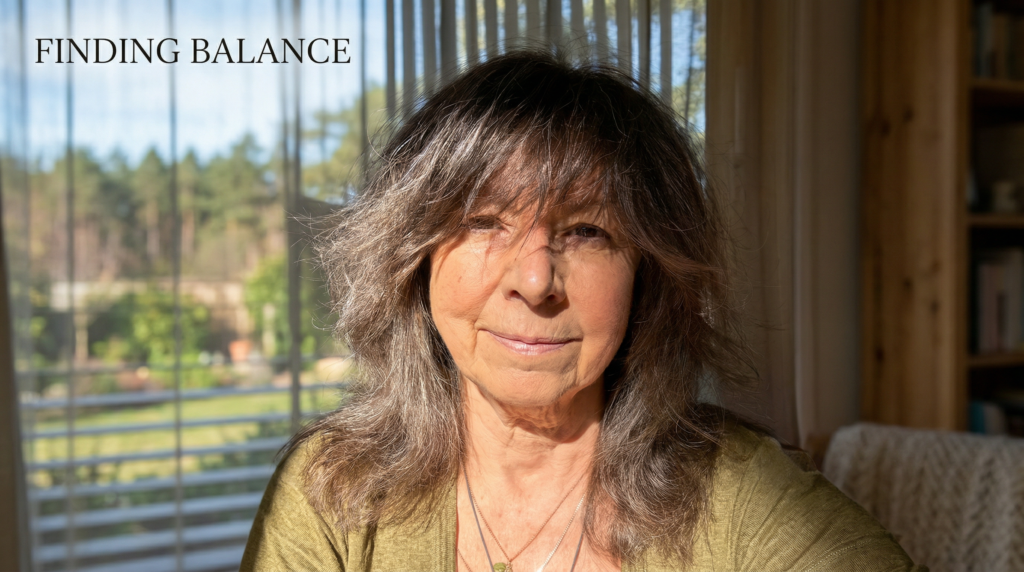
This blog post was written by Christel Kinning, today coach, mentor and advisor at HaveFunBeKind, and a Senior Advisor at Future Navigators. In service to the future of life. The article was first published on LinkedIn.